
Trolltunga is probably the least “unseen” hike I could ever write about on this website. It is one of the most famous hikes in Norway, and I have plenty of reasons why I think many people should think twice before adding it to their itinerary. But I also get the obsession. When I first came to Norway in 2018, one of the few things I knew about the trip was that I wanted to stand on that famous troll’s tongue myself. And even though it feels slightly painful to admit this as someone who usually promotes quieter places in Norway, Trolltunga is still a genuinely beautiful hike, with dramatic mountain scenery, wild views and a landscape that absolutely deserves the hype — just maybe not in the way Instagram sells it.
Everything to know about the hike to Trolltunga in Norway
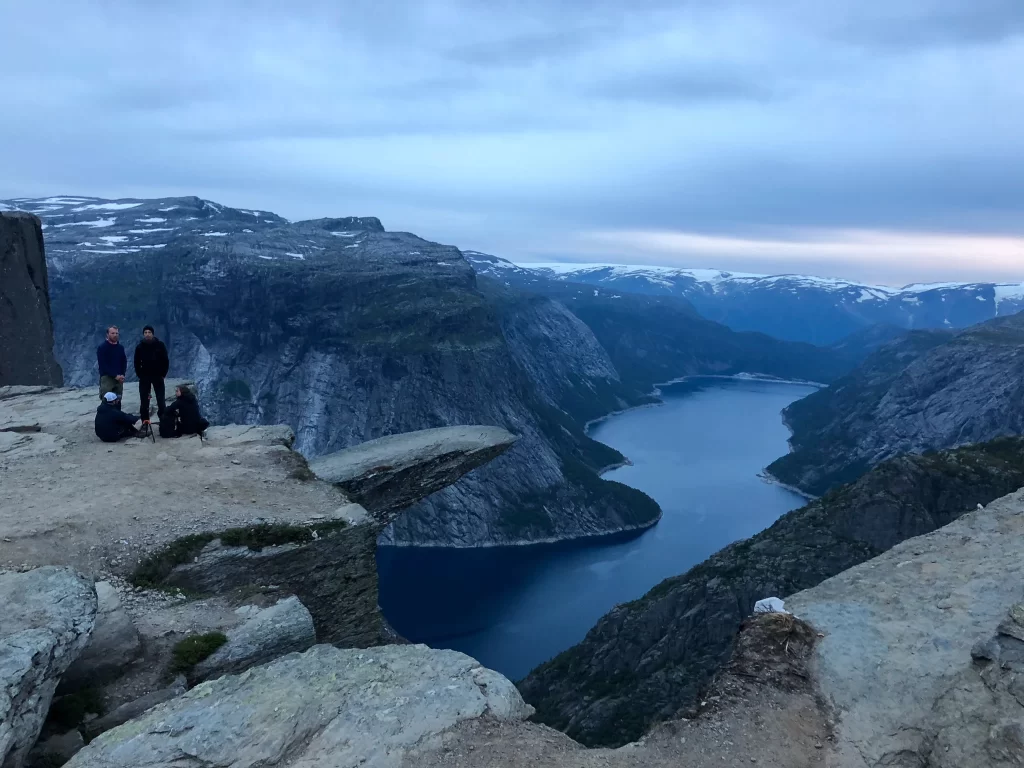
You have probably seen the photo from Trolltunga a million times already. The rock tongue hanging above Ringedalsvatnet lake is one of the most iconic images from Norway, and for many travellers, it is the whole reason they want to hike there in the first place. What the photo usually does not show is everything around it: around 80,000 people hiking to the same rock every year, expensive parking, shuttle buses, seasonal restrictions, fast-changing mountain weather and, most importantly, a long trail that should not be treated like a casual viewpoint walk. Trolltunga can be an unforgettable hike, but only if you understand what you are actually signing up for.
Trolltunga: Quick Facts
Country: Norway
Location: Ullensvang, Western Norway
Season: June – October
Type: Out-and-back hike
Difficulty: Black (extra demanding)
Time: 10-12 hours
Distance: 27 km / 16.8 mi (round trip)
Total Ascent: 1,232 m / 4,042 ft
Note: These facts cover the classic Trolltunga hike starting from the P2 Skjeggedal parking lot. There are also two other possible starting points: a longer route from P1 Tyssedal, and a shorter route from P3 Mågelitopp.
When I visited again in 2026, I noticed that many hikers used the shuttle to P3, which cuts the hike down to around 20 km / 12.4 mi round trip. I will explain the difference between the starting points later in the parking section.
Trolltunga Hike Location
The Trolltunga hike is located in Ullensvang in Western Norway, in the Hardangerfjord region. The famous rock formation sits about 1,100 metres above sea level, high above Ringedalsvatnet lake, with wide views over the surrounding mountains and glacier-shaped landscape.
The nearest town is Odda, which is the main base for most people hiking Trolltunga. Bergen is roughly 3–3.5 hours away by car, while Oslo is usually around 5.5–6.5 hours away, depending on the route, traffic and mountain road conditions.
Many travellers include Trolltunga in a longer Western Norway road trip around Bergen, Hardangerfjord, Voss, Flåm or the Sognefjord area, and it can fit well into that kind of itinerary. However, I would not treat it as a casual day trip from Bergen. It is a long and demanding hike, and if you want to enjoy it properly without turning the whole day into one giant logistics mission, staying in or near Odda before the hike makes much more sense.
Tip: If you want a quieter hike in the same region, consider Oksen instead. It’s a demanding summit hike with huge Hardangerfjord views, but far fewer crowds.
Trolltunga Hike Map & Elevation Profile
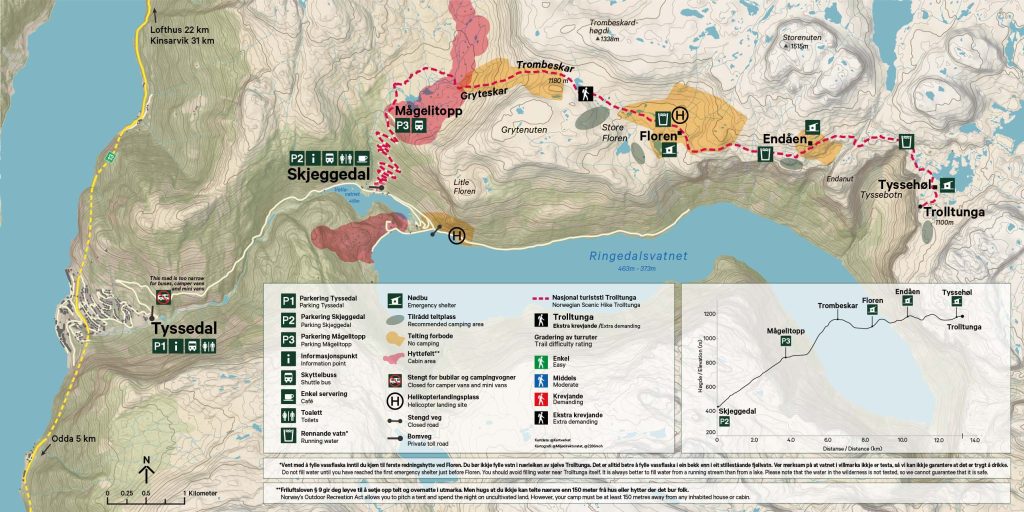
The classic Trolltunga hike from P2 Skjeggedal is around 27 kilometres (16.8 miles) round trip, with a total ascent of about 1,232 metres (4,042 feet). This distance is based on the official route, which follows the asphalt road in the first section up towards Mågelitopp. Some map apps (including Komoot here) may suggest a shorter but steeper forest trail between P2 Skjeggedal and P3 Mågelitopp instead. I personally hiked the road section, but I know people who have taken the forest trail too.
Difficulty of the Trolltunga Hike
The Trolltunga hike is rated as a black trail by DNT, which means extra demanding. In practice, this is a hike for people who are used to spending a full day outside and can handle many hours on their feet in mountain terrain. It is not necessarily the biggest killer in terms of elevation gain, but the distance is long, and that alone makes it tiring even for experienced hikers.
The trail itself is not extremely dangerous in normal summer conditions, but you should still treat it as a serious mountain hike. The most exposed part is not really the trail, but the famous rock formation itself. If you are tired, scared of heights, or simply do not feel comfortable stepping out onto Trolltunga, it is completely fine to skip the edge and enjoy the view from a safer distance. You do not have to risk anything for a photo.
Tip: I personally split the Trolltunga hike over two days. Partly because I did not want to hike such a long distance in one day, and partly because I did not want to queue for the famous photo. I explain more about this option later in the article.
Who Should Not Hike Trolltunga
I know I am repeating myself here, but Trolltunga really is an extra demanding hike. It is for people who feel comfortable spending a full day outside in mountain terrain, not for someone looking for a quick photo stop. The hike requires much more planning than it might seem from the famous Instagram picture.
I also would not recommend Trolltunga if you are short on time in Norway and trying to rush through the area. In my opinion, it makes much more sense to spend at least two nights nearby — one night before the hike and one night after. And honestly, depending on your fitness and how your legs feel, you may want a rest day afterwards too.
Trolltunga is also not a hike for people travelling in Norway without proper outdoor gear. The weather in the mountains can change fast, and if you do not have good hiking shoes, warm layers and a proper waterproof jacket, you may suffer a lot in the best case. In the worst case, you may become one of the people who need to be rescued from the trail.
Best Time of Year to Hike Trolltunga
The best time to hike Trolltunga on your own is usually from June to September, when the trail is normally suitable for experienced hikers without a guide. July and August are the safest bet if you want the most reliable summer conditions, but they are also the busiest months.
Just do not let the calendar fool you, Trolltunga is still a long mountain hike, and even in summer, good conditions can quickly turn into fog, rain, strong wind, cold temperatures or low visibility. Many people underestimate the hike because the famous photo makes it look like a simple viewpoint walk, which is exactly why there are mountain rangers on duty during the summer season and three emergency shelters along the route.
Tip: If you are visiting outside the main hiking season, Trolltunga is still possible, but I would strongly recommend going with a guide, especially if there is snow on the trail.
How to Get to the Trolltunga Trailhead
Access by Car
The main gateway to the Trolltunga hike is Tyssedal, a small village just outside Odda in the Hardangerfjord region. Getting there by car is fairly straightforward, but keep in mind that the roads around Hardangerfjord can be narrow, winding and slower than they look on Google Maps. This is Western Norway, so do not plan your timing too tightly.
I have also experienced the road in this area being closed because of landslides, so it is worth paying attention to local road signs and checking Vegvesen if the weather has been rough or if you are driving in spring or autumn.
Parking at Trolltunga Trailhead
There are three official parking areas for the Trolltunga hike: P1 Tyssedal, P2 Skjeggedal and P3 Mågelitopp. The higher you park, the shorter and easier your hike becomes, but also the more limited and expensive the parking gets. P1 is the lowest and longest option, P2 is the classic main trailhead, and P3 is the highest option, which cuts off the first steep section of the hike.
P1 Tyssedal
P1 Tyssedal is the lowest parking area and the best option for larger vehicles, campervans and motorhomes. The road between P1 Tyssedal and P2 Skjeggedal is narrow, and vehicles longer than 5.2 metres are not allowed to continue up to P2. From P1, the full hike to Trolltunga is around 38 km / 23.6 mi round trip, with about 2,000 m / 6,562 ft of total ascent, so I would not recommend starting the hike here unless you have a very specific reason or plan to use the shuttle further up.
In 2026, parking at P1 costs 330 NOK for one day, 550 NOK for two days or 770 NOK for three days. You do not need to pre-book P1, and it is open all year. Optional transport from P1 to P2 or P3 is paid separatelely.
P2 Skjeggedal
P2 Skjeggedal is the main Trolltunga trailhead and the parking area I would recommend for most people. This is also where I started my own Trolltunga hike. From P2, the classic route is around 27 km / 16.8 mi round trip, with roughly 1,200 m / 4,042 ft of total ascent, and the estimated hiking time is 8–12 hours.
In 2026, parking at P2 costs 550 NOK for one day, 770 NOK for two days or 990 NOK for three days. The toll road fee from P1 Tyssedal to P2 Skjeggedal is included in this price. You do not need to pre-book P2, but it makes sense to arrive early, especially in the main summer season.
P3 Mågelitopp
P3 Mågelitopp is the highest parking area and the shortest starting point for Trolltunga. It cuts out the first steep climb from P2 and reduces the hike to around 20 km / 12.4 mi round trip, with about 800 m / 2,625 ft of total ascent. This can be a good option if you want to make the hike shorter, but it is much more limited: there are only 30 spaces, the parking must be pre-booked in high season, and the road is narrow and steep.
In 2026, parking at P3 costs 600 NOK for one day, but the road toll from P1 to P2 is not included. You must also pay the 220 NOK road toll at P2 before driving up to P3, so the total cost is around 820 NOK for one day. P3 is open from June to September, with pre-booking required until the end of August. In September, drop-in may be possible if spaces are available. It is also not allowed to drive to P3 just to drop off or pick up passengers.
UPDATE 2026: It seems like many hikers now use the shuttle bus from P2 Skjeggedal to P3 Mågelitopp instead of starting the hike from P2 on foot. Starting from P3 saves 1–1.5 hours each way and skips the asphalt road section, which many people find the least interesting part of the hike.
In 2026, the shuttle costs around 150 NOK uphill and 100 NOK downhill for adults. The timetable changes quite a lot from month to month, so always check the latest information on the official Trolltunga website before your hike.
Access by Public Transport
Unlike many mountain hikes in Norway, Trolltunga is actually possible to reach by public transport. Most buses and shuttle connections are organised around Odda, and there are several ways to combine local buses, shuttle buses and the different Trolltunga parking areas depending on where you are staying and which route you want to hike.
In 2026, the shuttle bus from Odda to P2 Skjeggedal costs around 400 NOK return per person, while the shorter P1 Tyssedal to P2 Skjeggedal shuttle costs around 300 NOK return per person. For solo travellers or couples, this is usually a no-brainer. For families or groups of four, however, it is worth comparing the price with a taxi, as the total cost can be almost the same.
Since the timetables and rates change from season to season, I recommend checking the official Trolltunga website before your trip. In my experience, their transport information is kept pretty much up to date.
Access by Taxi
Taking a taxi to the Trolltunga trailhead is also possible, especially from Odda to P1 Tyssedal or P2 Skjeggedal. I would mainly consider this option if you are travelling in a larger group, if the shuttle times do not work for you, or if you want to simplify the logistics early in the morning. Just keep in mind that Odda is a small town, taxi availability is limited, and very early rides should be booked in advance.
In 2026, a taxi costs around 800 NOK one way from Odda to P2 Skjeggedal for up to four people, or 600 NOK one way from P1 Tyssedal to P2 Skjeggedal. That means a return taxi can cost roughly the same as shuttle bus tickets for a group of four, while giving you more flexibility with timing.
Tip: Feeling overwhelmed already? Planning a Norway hiking trip can get complicated fast, especially with fjords, ferries, parking, shuttles, weather and trail conditions. If you want help turning your ideas into a realistic route, I offer 1:1 consultations for Norway trips.
Facilities Along the Trolltunga Trail
Food and Supplies
If you want to buy food before the hike, sort it out in advance. Odda is the most obvious place to stock up before Trolltunga, with proper supermarkets and a better selection than the smaller fjord villages nearby. If you are coming from the north through Hardanger, Kinsarvik is another practical stop for basic supplies.
Trolltunga is a long day out, so bring a proper packed lunch, snacks and enough energy to get yourself both up and back down again. This is not the kind of hike where you want to realize halfway back that you only packed one sad protein bar.
Water
There are several places with running water along the Trolltunga trail, and the official trail map also marks water points. Still, I would not start this hike empty and just hope for the best. Bring enough water from the beginning, and if you plan to refill along the way, I recommend using a water filter to be on the safe side.
Toilets
There are no public toilets along the Trolltunga trail, so use the toilets at P1 Tyssedal or P2 Skjeggedal before you start hiking. If you need to go during the hike, do it responsibly: stay well away from streams and lakes, and go downhill from the trail. And yes, you need to pack out your used toilet paper too.
Waste
There are no bins along the route, so everything you bring into the mountains needs to come back down with you. That includes food wrappers, tissues and used toilet paper. You can throw your rubbish away in the bins at the parking areas after the hike.
Trolltunga Trail Description
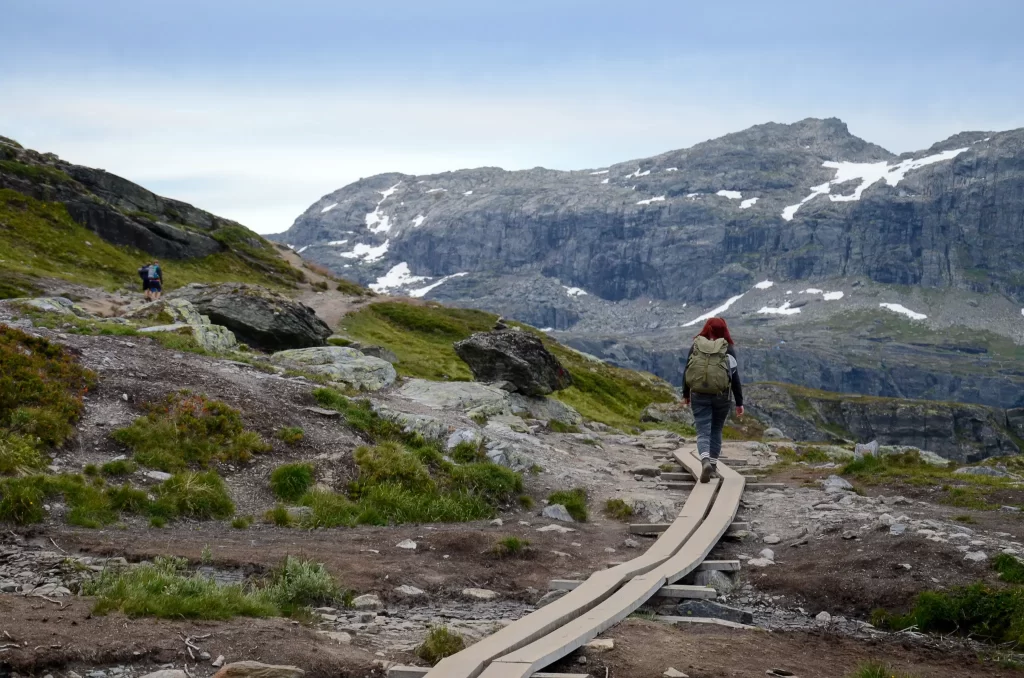
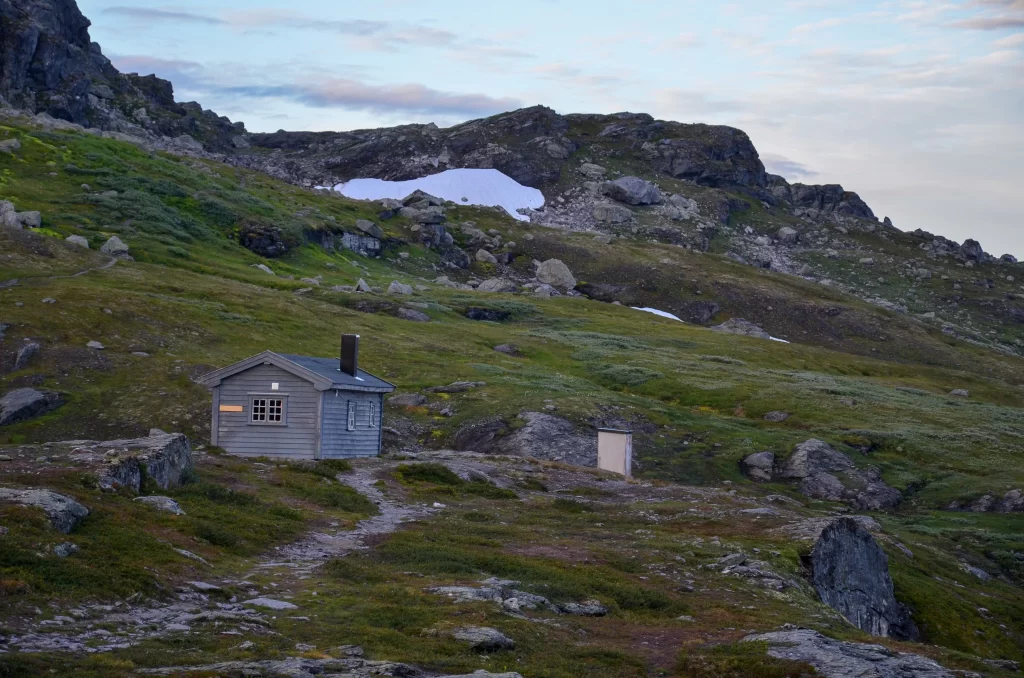
As I mentioned, the classic Trolltunga hike starts at P2 Skjeggedal. From there, the first section climbs steeply up towards Mågelitopp. The official route follows the asphalt road, which is not exactly the most romantic start to a mountain hike, but it gets the biggest climb out of the way early. There is also a steeper forest trail near the old funicular, but it can be slippery and more awkward in wet conditions, so the road is the more straightforward option.
Tip: Even though the trail is easy to follow, it’s smart to download an offline map (UT.no, Norgeskart or Mapy.com) to your phone before you go.
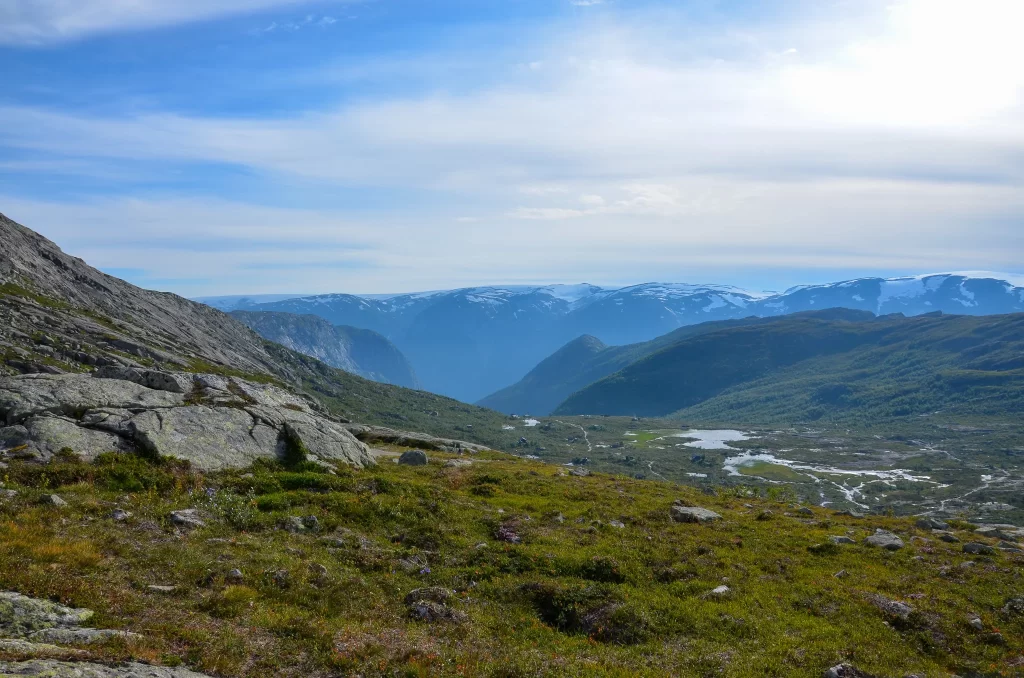
After Mågelitopp, the route continues into the mountains and becomes more varied. The trail is mostly clear and T-marked, with flatter sections, rocky parts, small climbs and views opening up over the surrounding landscape. Further along the route, you continue past old traces of the hydropower development that shaped this area in the early 1900s. The landscape here feels wide and open, with a mix of rock, water, mountain plateaus and big views towards the lake Ringedalsvatnet. The final part brings you towards the famous rock formation itself. Trolltunga hangs about 700 metres above Ringedalsvatnet, and yes, the view is spectacular.
The return follows the same route back to P2 Skjeggedal. This is where the length of the hike really matters. Even if the way there felt manageable, you still have many kilometres to walk back, so save enough energy, food and daylight for the return.
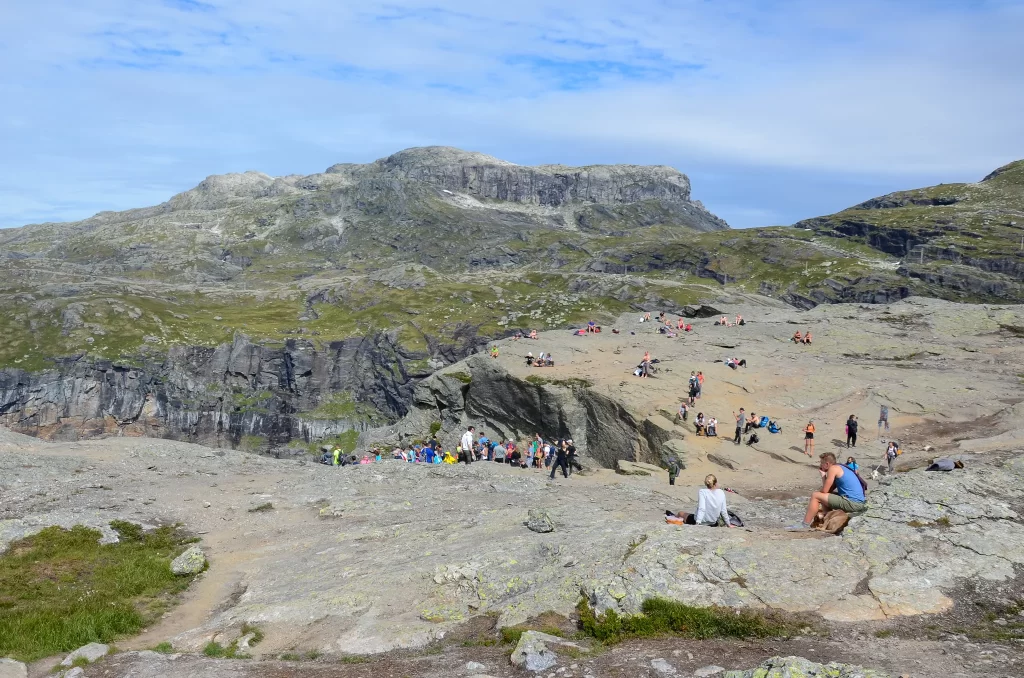
Tip: Trolltunga is usually busiest between 12 PM and 3 PM from late June to late August, especially on Saturdays and the first sunny day after bad weather. Around midday, you may wait 30–45 minutes for the classic photo on weekdays, and sometimes 60–90 minutes on busy Saturdays.
How to Hike Trolltunga in Two Days (Camping Near Trolltunga)
One of my favourite ways to enjoy Trolltunga is actually to split the hike over two days and sleep up in the mountains. Yes, it means carrying a much heavier backpack, but it also means you do not have to rush the whole route in one long day. You can start a bit later than most hikers, take your time on the way up, enjoy the evening in the mountains, and still have enough energy for the hike back down the next day. Also, I personally hate standing in any kind of queue, so waking up very early and getting the famous Trolltunga photo without waiting was very much my kind of solution.
Camping near Trolltunga is not unusual, but because this is such a popular and vulnerable area, wild camping is regulated here too. Please follow the official camping map and only camp in the areas where overnight stays are allowed. I personally prefer camping a bit further away from the rock formation itself. It feels more peaceful and private, while still being close enough to walk to Trolltunga early in the morning.
And when I say “private”, take that with a grain of salt. This is still Trolltunga, so you should expect people walking around at different times of day, especially in the main summer season. That is also why I would rather bring a tent than just sleep under the open sky. On top of that, summer nights in Norway can be surprisingly bright, even this far south, so for me, a tent is much more comfortable than trying to sleep under the stars while the sky never really gets dark.
Where to Stay Near Trolltunga Hike
Note: Some of the links below may be affiliate links, which means I may earn a small commission if you book through them. It does not cost you anything extra.
Since Trolltunga is a long and tiring hike, I really recommend staying in the area for at least two nights: one night before the hike and one night after. The most practical bases are Odda, where you have more shops, restaurants and transport options, and Tyssedal, which is closer to the trailhead.
For backpackers
If you are just looking for a place to pitch your tent and shower after the hike, the easiest option is Trolltunga Camping in Odda. If you prefer a hostel-style stay, Trolltunga Hostel in Tyssedal is a good budget option closer to the trailhead.
For campervans
It is not that easy to find a free overnight spot close to the Trolltunga trailhead. Camping is not allowed at the official parking areas, and because of the narrow fjord landscape, there are not many obvious free spots around the water either. In this case, Trolltunga Camping in Odda is again the simplest legal option.
For budget travellers
For a comfortable hotel stay
For a normal hotel-style stay before or after Trolltunga, look at Trolltunga Hotel in Odda or Tyssedal Hotel in Tyssedal. Odda is more practical for shops, restaurants and transport, while Tyssedal is quieter and closer to the trailhead.
For a more special stay
If your plan is that Trolltunga will be part of a nicer Hardanger trip, I would honestly look beyond Odda and Tyssedal. The accommodation closest to Trolltunga is mostly practical rather than dreamy. For a more scenic fjord-hotel experience, look towards places like Lofthus or Utne instead — just keep in mind that they are less convenient for an early Trolltunga start.
Useful accommodation searches:
- Check accommodation in Odda: best for shops, restaurants and shuttle connections
- Check accommodation in Tyssedal: best if you want to stay closer to the Trolltunga trailhead
- Check accommodation near Trolltunga: best if you want to compare more options in the area
Is Trolltunga Worth It? My Honest Opinion After Hiking It
So is it worth it? Well, both yes and no.
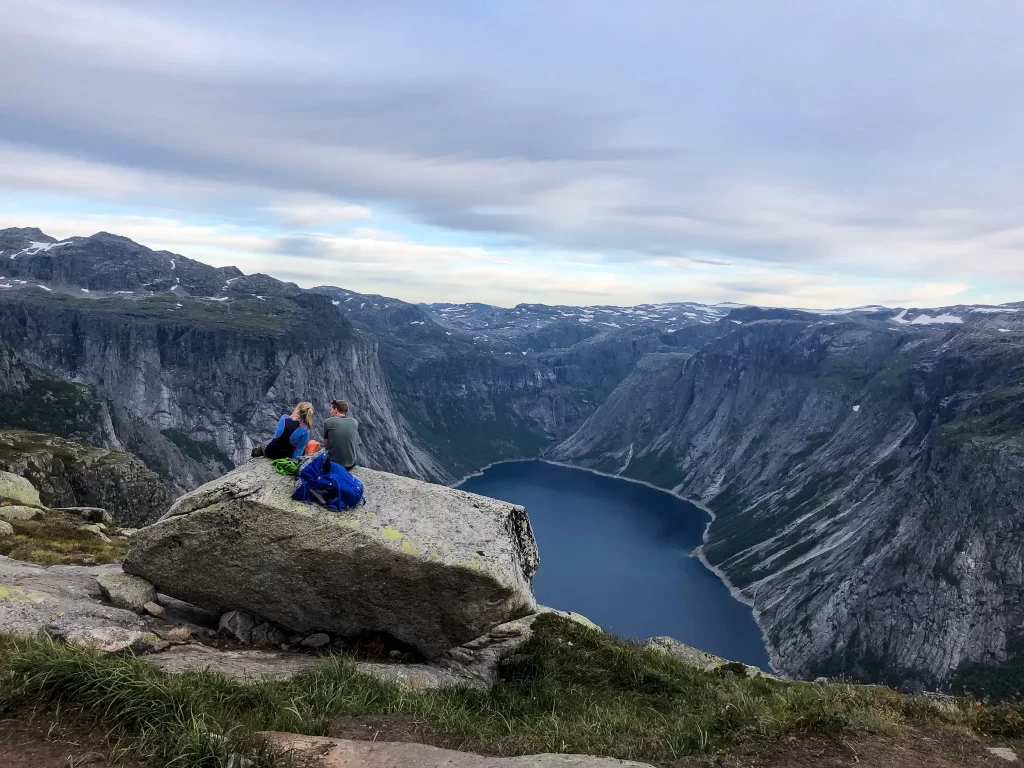
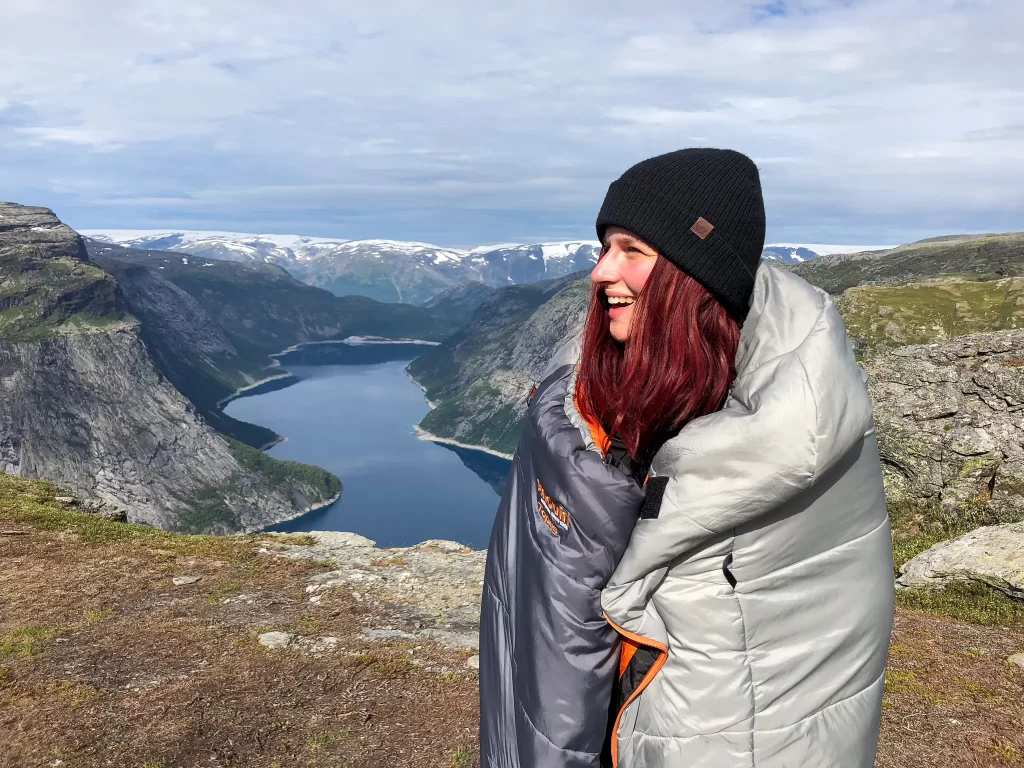
As a hiker who has walked hundreds of kilometres not only in Norway, but also in other famous hiking destinations, I can honestly say that Trolltunga is a breathtaking hike. And not only because of the famous rock tongue at the end. For me, the real magic is the landscape along the way, especially the views over Ringedalsvatnet, with its almost unreal blue colour surrounded by raw mountain terrain.
But as someone who usually looks for quieter places, the whole circus around Trolltunga also feels very questionable to me. When tens of thousands of people walk the same fragile mountain trail every year, the impact becomes very real: path erosion, litter and human waste have all been documented as concerns in the area. The alpine vegetation here is exceptionally vulnerable, so as someone who cares about the environment, these facts do not exactly make me want to hike there again anytime soon.
Tip: If you want a more adventurous way to reach Trolltunga, consider the Trolltunga Via Ferrata. I did it in summer 2026, and it was a fun alternative to simply hiking the regular trail. Full article coming soon.
Alternatives to Trolltunga in Hardanger
If you are not sure Trolltunga is the right hike for you, Hardanger has plenty of beautiful alternatives. They are not all direct replacements, but depending on what you actually want from your Norway trip, some of them may make much more sense.
- Oksen: Best if you want a demanding summit hike with huge Hardangerfjord views and far fewer crowds. It is still a proper mountain day, but the experience feels quieter, more spacious and much less controlled than Trolltunga. It’s personally my favourite hike in the area.
- HM Queen Sonja’s Panoramic Hiking Trail: A great option if you want a beautiful day hike with fjord views, varied terrain and a bit of local history. It is still a known route, but it does not have the same “everyone is here for one photo” feeling.
- Buarbreen: A shorter but still impressive hike near Odda, especially if you want glacier views without committing to a 10–12 hour mountain day.
- Bondhusvatnet: Best if you want something scenic, easy and low-commitment. It is more of a beautiful walk than a serious mountain hike, but the lake and glacier landscape are stunning.
Extra Tips for Hiking Trolltunga
- Pack for a real mountain day. Bring proper hiking shoes, warm layers, a waterproof jacket, food, snacks, water, an offline map, power bank and basic first aid.
- Start early enough. Trolltunga is not a hike to start casually at noon. There are warning signs on the trail telling hikers to turn around if they pass certain points too late.
- Do not underestimate the return. Reaching Trolltunga is only halfway. Save enough food, water and energy for the long hike back.
- Watch the daylight. June and July have long days, but by September, daylight disappears faster than many visitors expect.
- Consider a guide if you are unsure. If you are experienced in mountain terrain, hiking Trolltunga independently in summer is fine. If not, a guided hike can give you extra safety and confidence.
- Check the weather properly. Do not rely on one quick forecast. Trolltunga can be cold, windy, wet and foggy even in summer.
- Book parking or transport in advance. This is especially important if you want to start from P3 Mågelitopp or need a specific shuttle/taxi time.
- Have a backup plan. If the weather is bad, do not force Trolltunga just because it was your big plan. Hardanger has other beautiful options.
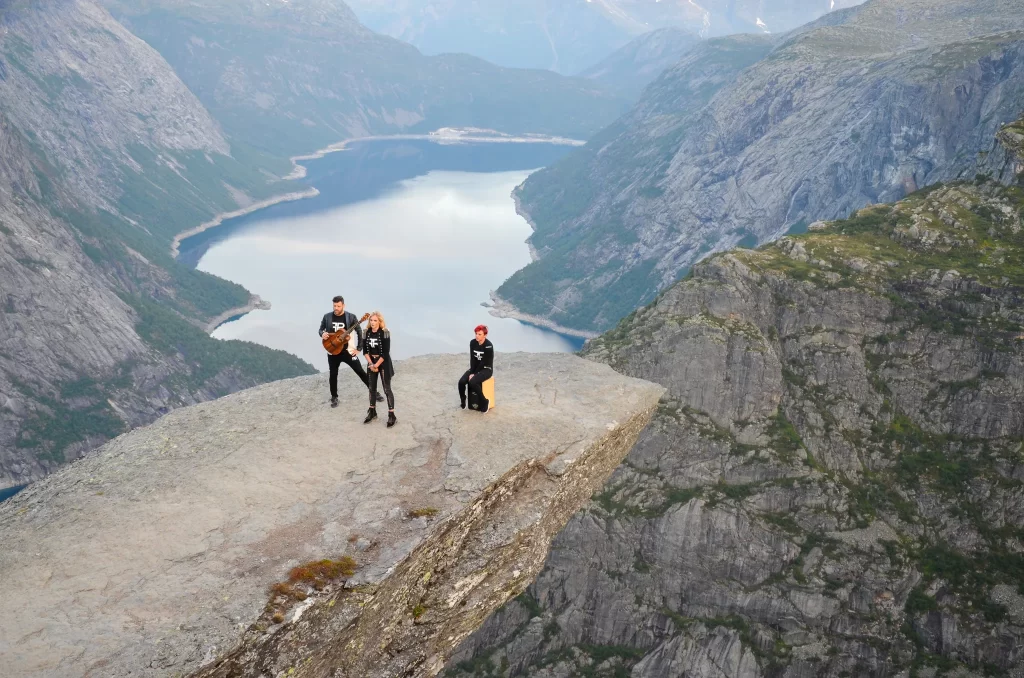
Need help planning your Norway hiking trip?
Planning Trolltunga is not just about deciding whether you can hike 27 km. It is about choosing where to stay, when to start, whether to use shuttle buses, how to fit it into a Western Norway itinerary, and what to do if the weather changes. If you want help building a realistic itinerary in Norway, I offer 1:1 consultations.
FAQ: Trolltunga Hike in Norway
How long is the Trolltunga hike?
From P2 Skjeggedal, Trolltunga is around 27 km / 16.8 mi round trip and usually takes 10–12 hours. From P3 Mågelitopp, it is around 20 km / 12.4 mi round trip.
How difficult is the Trolltunga hike?
Trolltunga is a black / extra demanding hike. It is not very technical in good summer conditions, but the length and elevation make it a serious mountain day.
Where do you park for the Trolltunga hike?
There are three official parking areas: P1 Tyssedal, P2 Skjeggedal and P3 Mågelitopp. I recommend P2 Skjeggedal for most hikers.
Should you start from P2 Skjeggedal or P3 Mågelitopp?
Start from P2 for the classic route. Start from P3 if you want a shorter hike, but book early — spaces are limited.
Can you get to Trolltunga by public transport?
Yes. Most connections run via Odda, with shuttle buses to P1, P2 and sometimes P3 in season.
Can you visit Trolltunga from Bergen in one day?
Technically yes, but I would not recommend it. It becomes a very long day, so staying near Odda makes much more sense.
What time should you start the Trolltunga hike?
Start early in the morning, especially from P2. Trolltunga is long, and there are warning signs telling hikers to turn around if they pass certain points too late.
Can you camp near Trolltunga?
Yes, but only in designated camping areas. Follow the official camping map and leave no trace.
Can beginners hike Trolltunga?
I would not choose Trolltunga as a first serious mountain hike. Fit beginners may manage it with good preparation, but some hiking experience is strongly recommended.
Is Trolltunga worth it?
Yes and no. The landscape is beautiful, especially around Ringedalsvatnet, but the hike is crowded, expensive and heavily managed.
What is a better alternative to Trolltunga?
For a demanding hike with huge Hardangerfjord views and far fewer crowds, I would recommend Oksen.
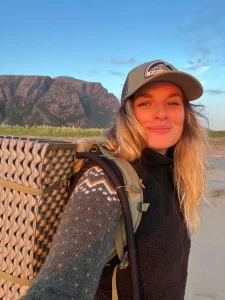
Hi, I’m Jana — outdoor guide, writer, and long-time local in Norway. I share trail-tested tips and local insight for exploring lesser-known parts of the Nordics.
If you’re after more mountains, fewer crowds, and honest advice, you’re in the right place.
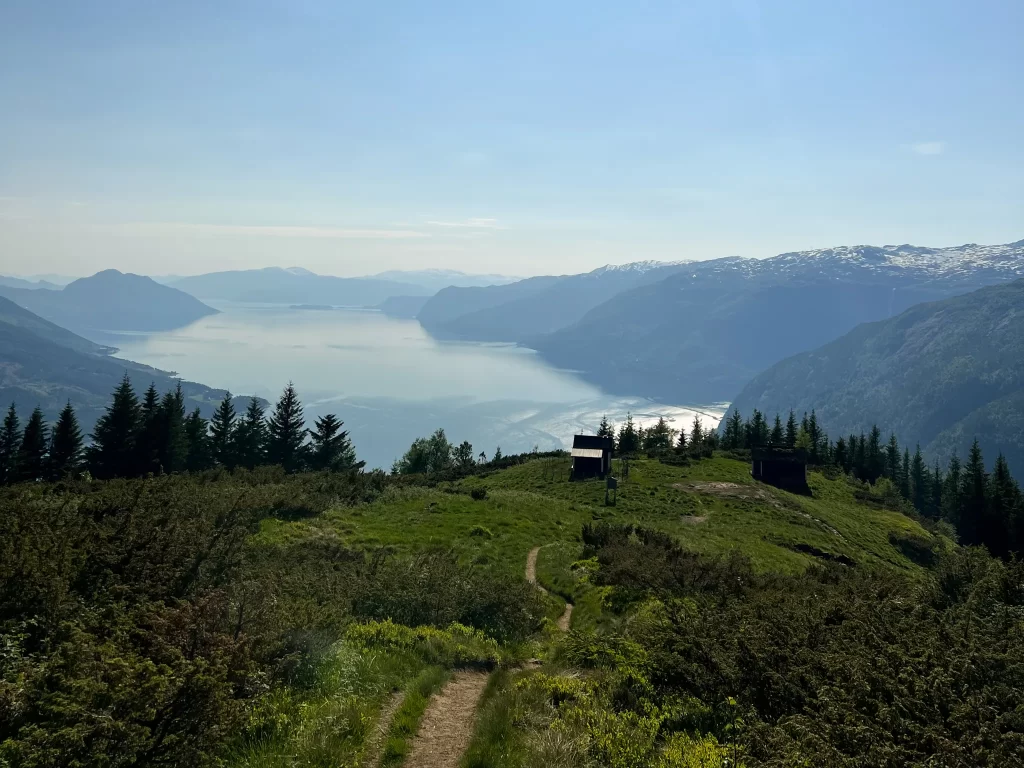
Oksen Hike: The Hardangerfjord Trail Locals Would Recommend

