Add a header to begin generating the table of contents
The right to roam in Norway is often summed up as “you can camp anywhere”. It sounds beautiful, wild, and almost too good to be true — and in a way, it is. Allemannsretten, the Norwegian term for the right to roam, gives people the right to move through nature, hike, swim, pick berries, ski, and camp on uncultivated land. But it is not a free pass, and it is definitely not a travel hack.
This article is a foundation guide to understanding how outdoor access works in Norway, especially for hikers, bikers, and people travelling through the mountains without a car. It is not a campervan parking guide, and it is not a full guide for travelling around Norway by car with a tent in the trunk. But before you dive into the practical rules of your particular setup, I recommend starting here.
What is allemannsretten?
Allemannsretten is usually translated as the right to roam or the public right of access.
In simple terms, allemannsretten gives everyone the right to move through and spend time in Norwegian nature, even when the land is privately owned, as long as you stay on uncultivated land (utmark), follow the rules, and act with care.
That includes things like:
walking and hiking
skiing
swimming
paddling
picking berries and mushrooms
camping in suitable places
moving through forests, mountains, moorland and coastal areas
A right older than modern tourism
Long before Norway became a travel destination, people moved through the landscape as part of everyday life. They crossed mountains, travelled between farms and settlements, gathered berries and mushrooms, and used nature in a way that was not always neatly divided into “public” and “private” land.
Before it was written into modern law, allemannsretten already existed as customary law, rooted in older Norwegian traditions. Today, the main rules are part of Friluftsloven, Norway’s Outdoor Recreation Act from 1957.
That history matters because it shows what the right to roam in Norway was built around. Not tourism, not vanlife, not “how to sleep for free in Norway”. But a much deeper relationship between people, land, and everyday outdoor life.
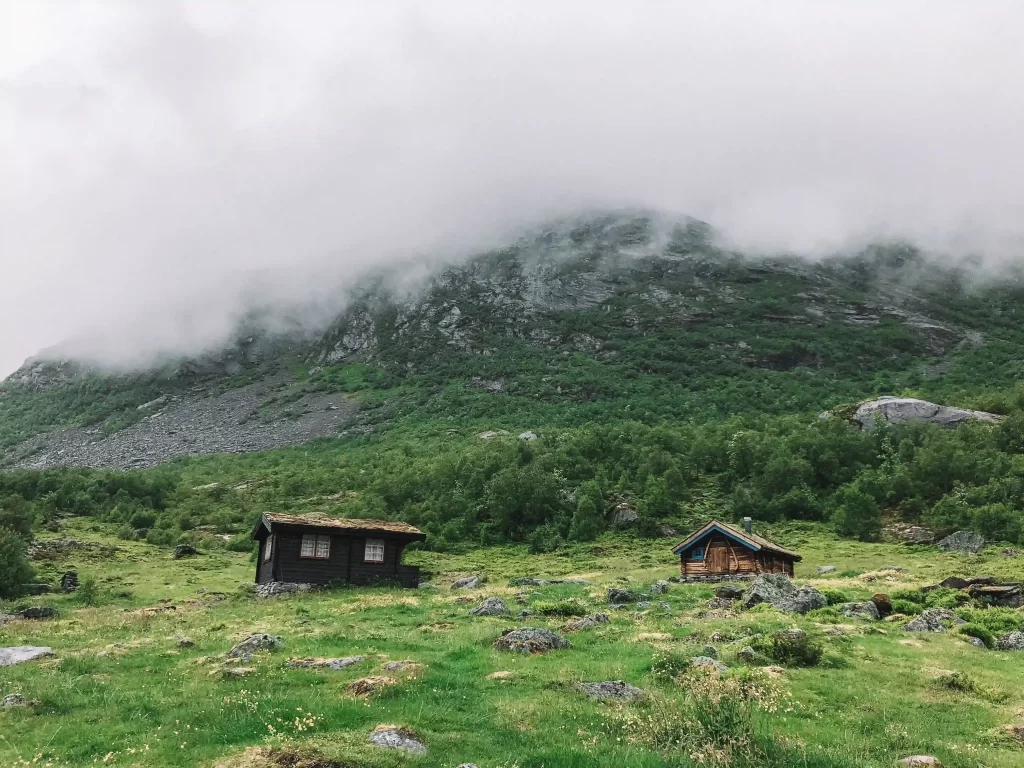
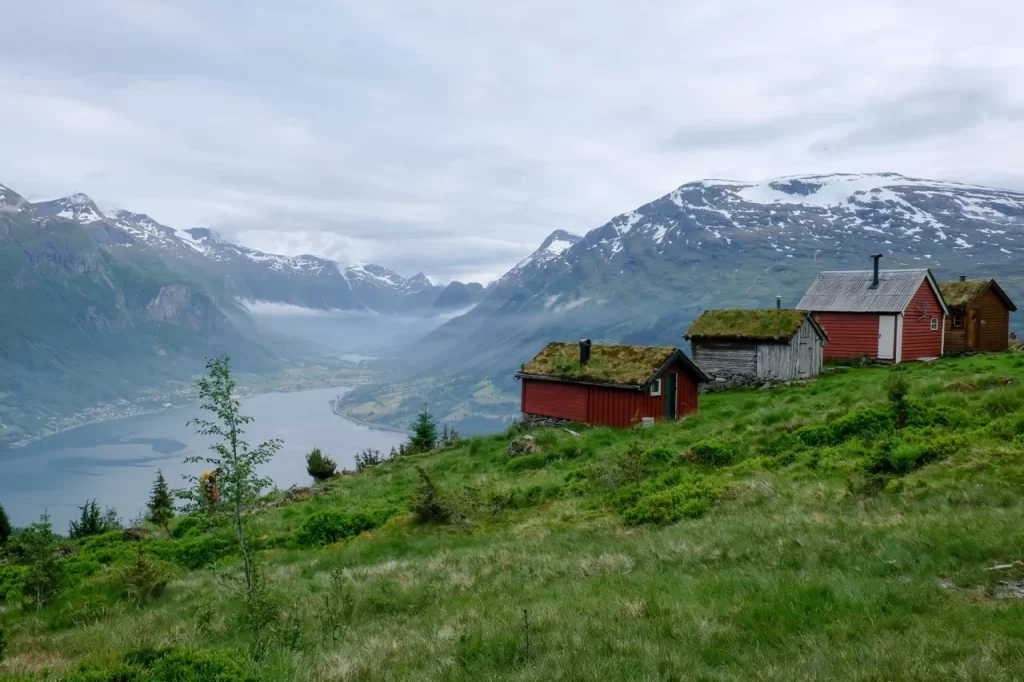
Old mountain cabins are a quiet reminder that people moved through these landscapes long before Norway became a travel destination.
Why Norway protects the right to roam
Allemannsretten is about more than individual freedom. At its core, it carries a simple idea: nature should not only be available to people who own land, have a cabin, or can pay for organised outdoor experiences. In Norway, access to nature is part of everyday life, a way to clear your head, move your body, slow down, breathe, and stay well. It is not a luxury product, it is something that should be available to everyone.
Innmark vs utmark: the line that matters
If you want to understand the right to roam in Norway, you need to understand one basic distinction: INNMARK vs UTMARK.
This is where many visitors get confused.
Innmark
Innmark is land that is cultivated, private, or closely connected to someone’s home, farm or everyday use.
This can include:
gardens
courtyards
farmyards
cultivated fields
meadows used for farming
private zones around houses and cabins
industrial areas
other land where public access would clearly disturb the owner or user
This is where the Norwegian landscape is not always easy to read: private or sensitive land is not always marked with fences, signs, or obvious boundaries. A good rule of thumb is simple: no fence does not automatically mean no rules, and no sign does not automatically mean welcome. If you are unsure, keep moving and choose a place that feels clearly more remote, natural, and unobtrusive.
Utmark
Utmark is uncultivated land. This is where the right to roam mainly applies, and it usually includes:
forests
mountains
moorland
shorelines
open natural areas
other land that is not classified as innmark
In utmark, you generally have broad rights to move through and spend time in nature, as long as you do it with care and without causing damage or disturbance. But utmark is not no man’s land. Most nature in Norway is still owned by someone. Allemannsretten gives you access across ownership lines, but it does not erase ownership. In practice, that means you are allowed to pass through, enjoy, and stay lightly in nature, but not take over the place.
Open mountain terrain like this is a good example of utmark.
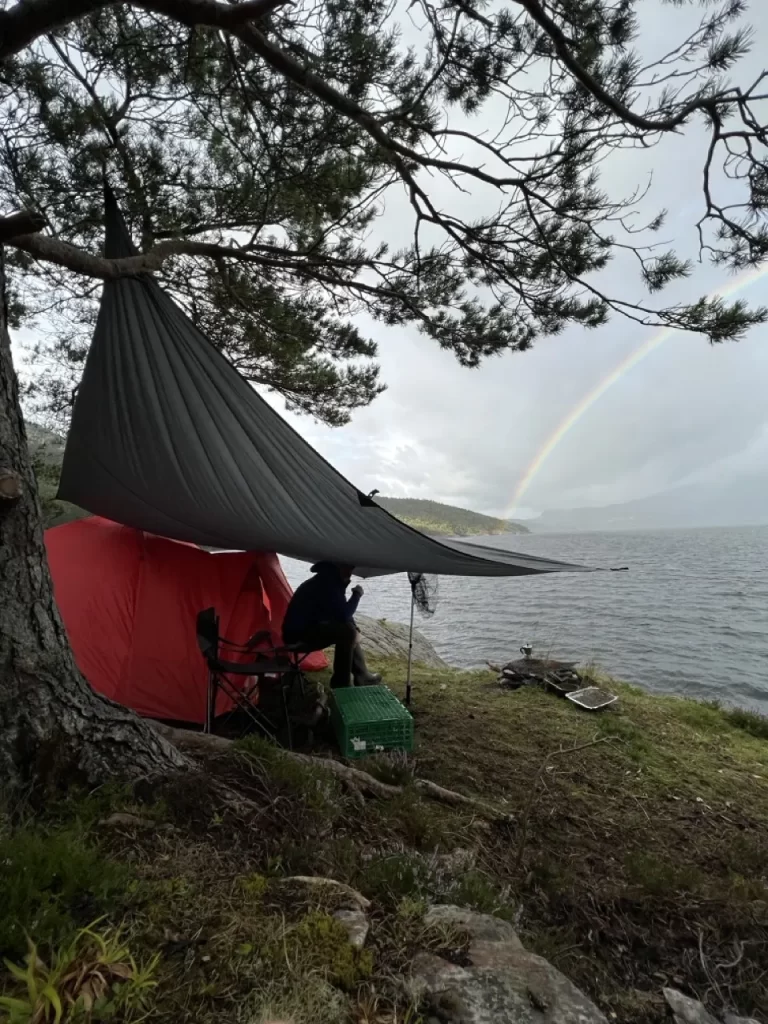
Utmark can also look like this: the shore of a Norwegian fjord.
Can you wild camp in Norway?
Yes, you can wild camp in Norway — but not anywhere.
In general, you may pitch a tent or sleep under the stars in UTMARK, as long as you stay at least 150 metres away from the nearest inhabited house or cabin. You can usually stay in the same place for up to two nights without asking the landowner. In remote mountain areas, staying longer may be allowed, but only when you are far from houses and your presence does not cause damage, disturbance, or conflict with local use.
Also, keep in mind that local restrictions can still apply, especially in protected areas, popular places, or areas under pressure. So even when the general right exists, signs and local rules matter.
Tip: If you are looking for specific places to explore, check my Trail & Activity Tips section. That is where I share practical guides to outdoor experiences around Norway.
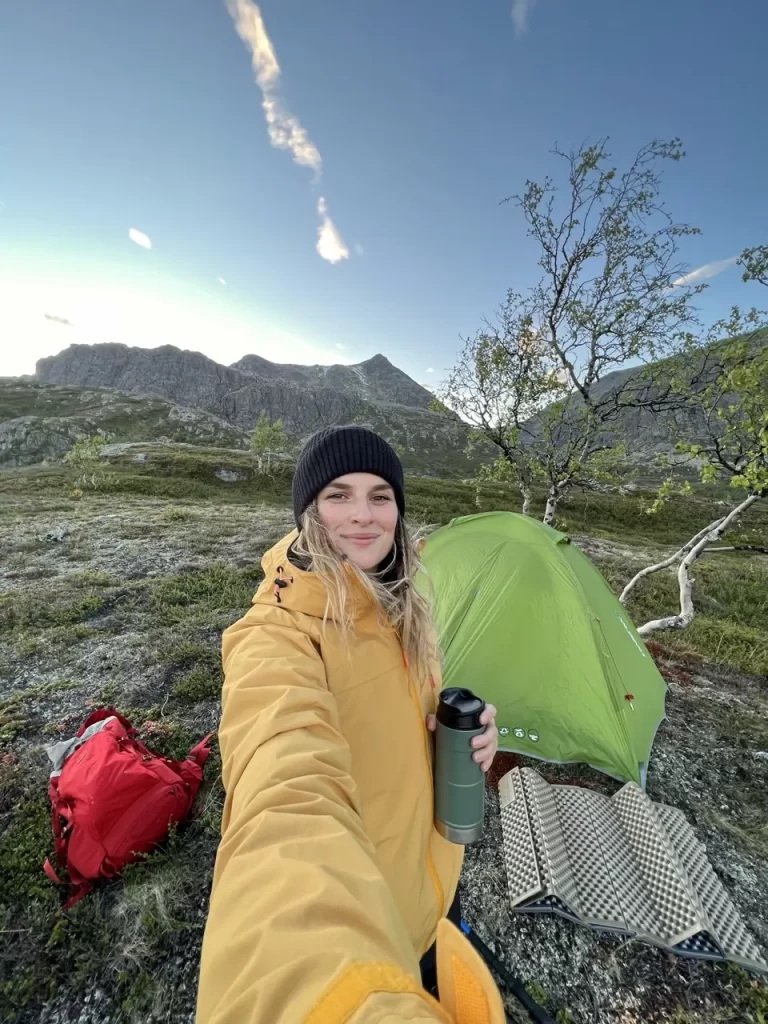
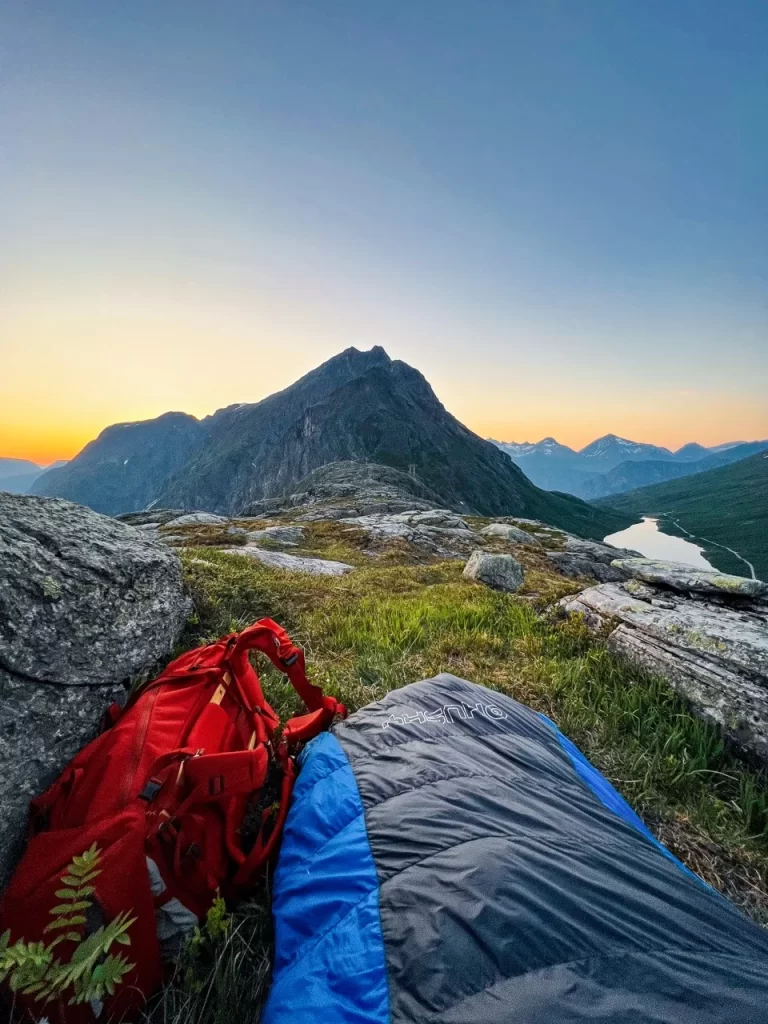
Yes, the rules exist. But you can still find wild camping spots this good.
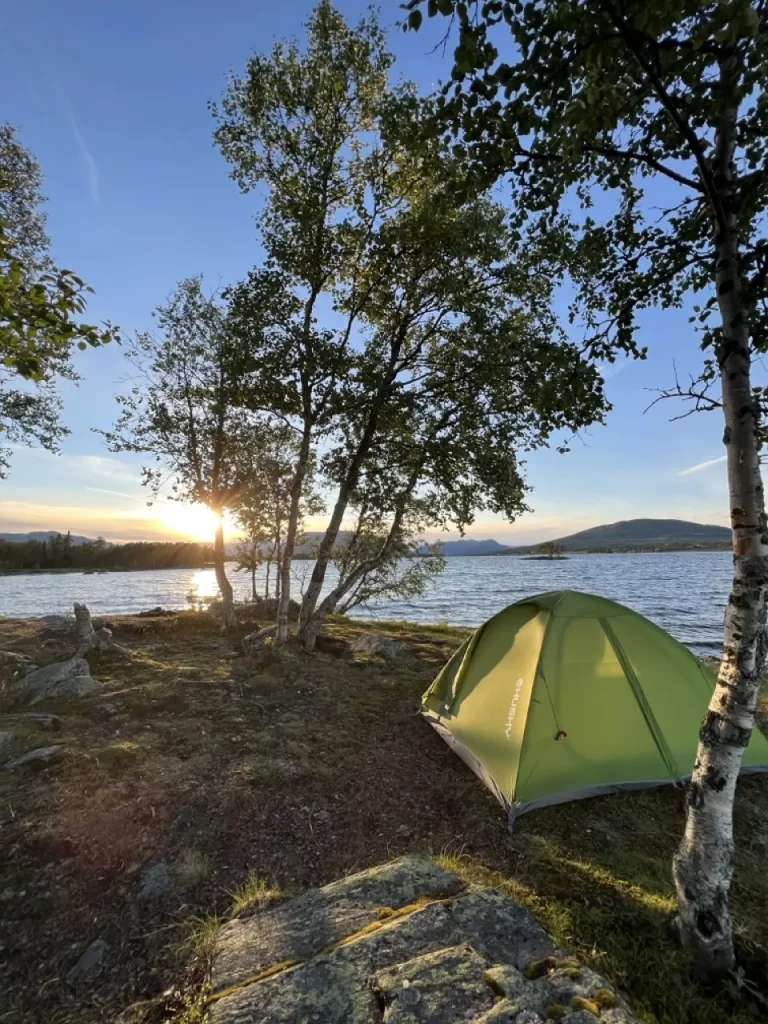
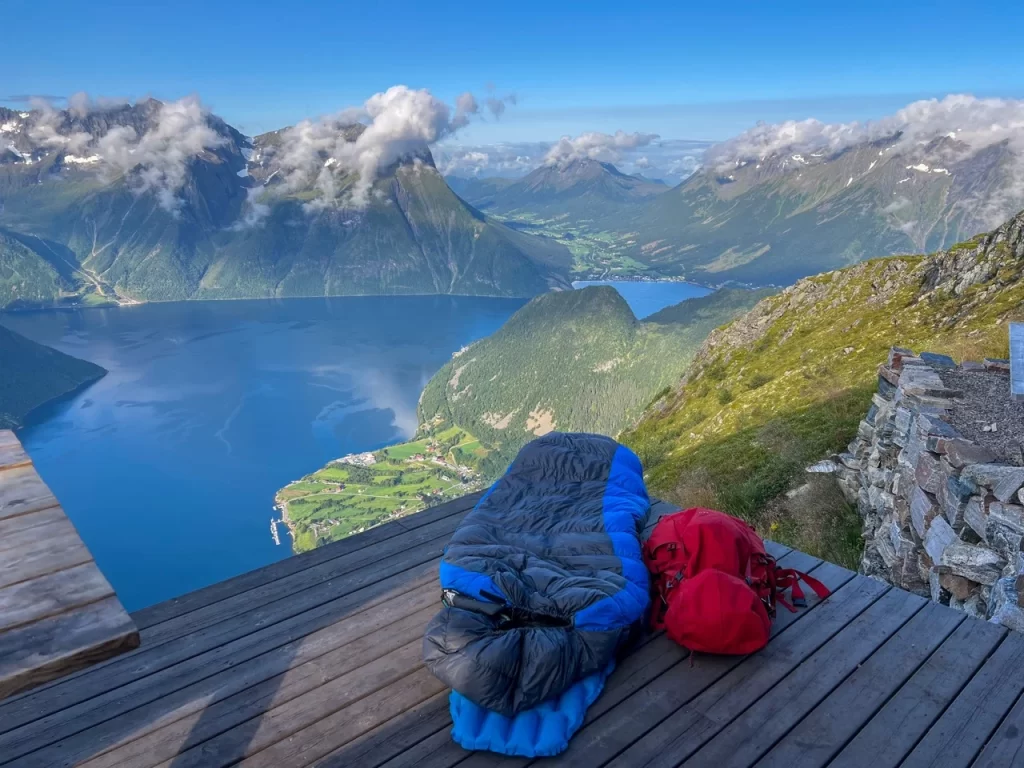
You do not always need a tent. Sleeping under the open sky is also part of wild camping.
The forgotten half: allemannspliktene
Everyone loves talking about allemannsretten. Fewer people talk about allemannspliktene — the duties that come with the right. But without the duties, the right quickly becomes a mess.
In practice, that means:
keep distance from homes and cabins
respect private land and farm activity
do not disturb livestock or wildlife
close gates behind you
do not damage vegetation
do not leave rubbish
carry out toilet paper
avoid making fires where it is unsafe or forbidden
do not block roads, tracks, or access points
respect signs and local restrictions
use common sense, even when an app tells you otherwise (hello park4night)
The simplest rule is to leave the place looking like you were never there.
A small local note: Just because nobody asks you to leave does not always mean everything is fine. Norwegians are often not very confrontational with strangers. They may simply get annoyed, talk about it later, complain to the municipality, or put up a sign the next summer. The absence of confrontation is not the same as approval.
Use the place lightly. Leave it clean. Let the next person have the same magic.
What allemannsretten does not mean
Let’s make this clear: the right to roam in Norway is not a free pass to do whatever fits your travel plan.
Allemannsretten does not mean:
you can camp anywhere
you can drive anywhere
you can park anywhere
This becomes important once cars, campervans, and road trips enter the picture. The right to roam in Norway is mostly about people moving through nature on foot or on a bike.
Confusing? Indeed. But regarding the rules, hiking with a tent in your backpack, travelling by car with a tent in the trunk, and sleeping in a campervan are three different situations. They may overlap in real life, but they are not treated the same in practice.
Step one: check if it is utmark.
Step two: check the rest of the rules. Then enjoy.
What this means for road trips, tents and campervans
For hikers, bikers, skiers, and people moving through nature without a vehicle, the right to roam is usually the main framework. Once you add a car, tent in the trunk, roof tent, campervan, or motorhome, the practical questions become more specific.
Situation: a car with a tent
If you travel by car with a tent, you need to think about two separate things: where you can park and where you can camp. Those are not the same question, and they are not covered by the same rules. Allemannsretten may explain where you can stay in nature, but it does not automatically give your vehicle the right to be there.
Situation: a campervan
If you travel by campervan or motorhome, you are often not dealing with classic wild camping at all. You are dealing with a different set of rules around vehicles, parking, road access, and local restrictions. And once motorised access into nature is involved, this belongs much more to Motorferdselloven (Norway’s law on motorised traffic in uncultivated land and waterways) than to allemannsretten.
This is where things get interesting, and also where one vague “right to roam” answer stops being helpful. That’s why I cover these situations separately here (coming soon):
Wild Camping in Norway by Car: Road Trip Rules for Tent Camping
Campervan Camping in Norway: Can You Sleep Anywhere?
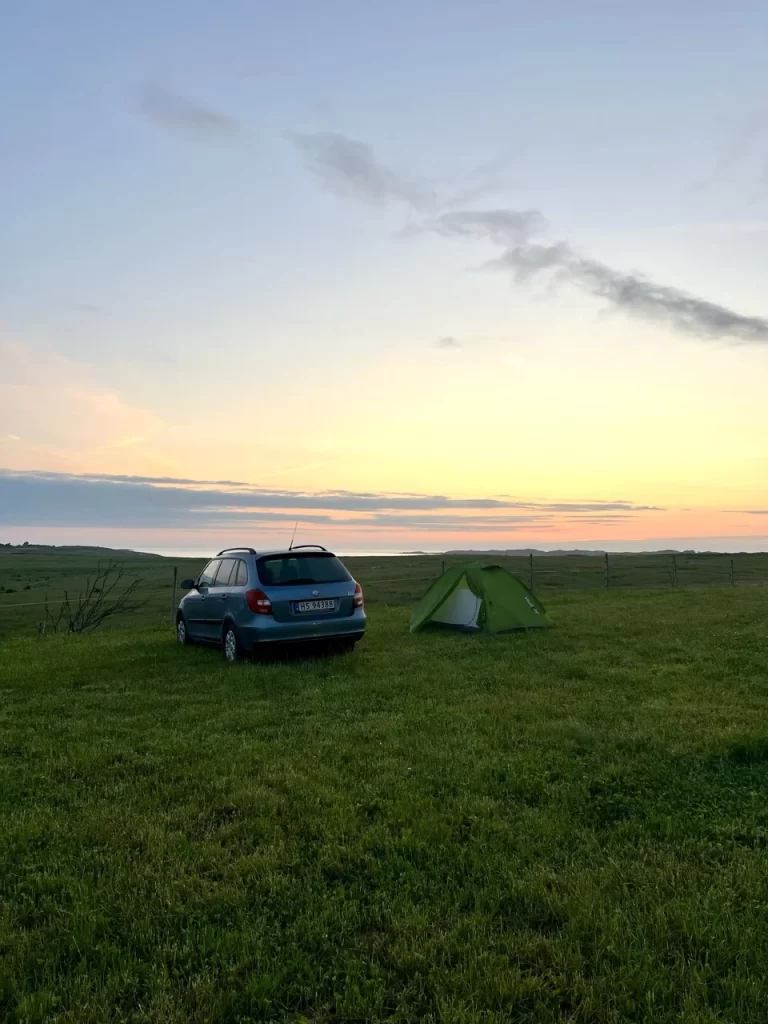
With a car and a tent, parking and camping are two different questions. (Photo from a campsite, you generally cannot just drive onto open grass.)
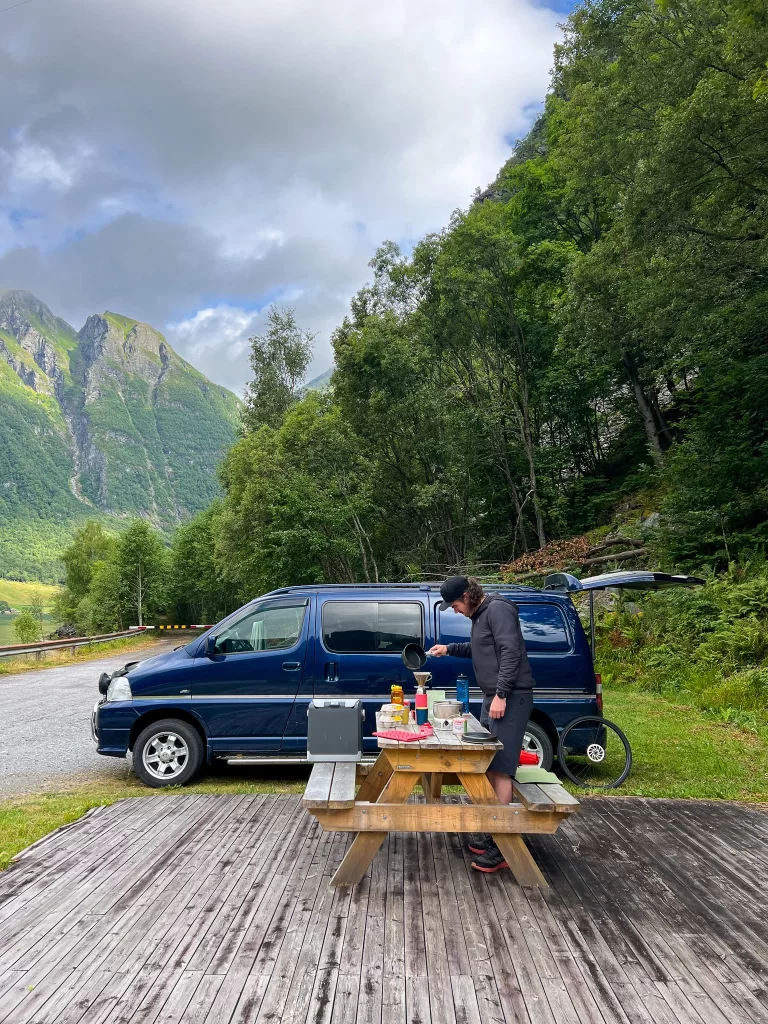
With a campervan, you are mostly dealing with vehicle rules, parking, road access, and local restrictions — not classic allemannsretten.
Conclusion: freedom is the privilege of being trusted
For many visitors, Norway is a once-in-a-lifetime trip. They come, enjoy the freedom, and leave. But for those of us who live here, allemannsretten is not a travel perk. It is part of everyday life.
That is why it matters to protect it. Not by making outdoor life complicated, but by using this freedom in a way that keeps it possible. Norway gives people remarkable access to nature. The least we can do is understand the responsibility that keeps that freedom alive.
Tip: Still confused about what applies to your trip? I get it, Norway’s outdoor rules can be hard to read from the outside. I offer 1:1 Norway travel consultations where we can go through your route, plans, and questions together, so you can travel with more confidence.
Before treating allemannsretten as a travel perk, remember that this freedom also belongs to the people who live here every day.
FAQ: Norway’s Right to Roam
What does allemannsretten mean in English?
Allemannsretten is usually translated as the right to roam or the public right of access.
What is the difference between innmark and utmark?
Innmark is cultivated, private or actively used land, such as gardens, farmyards, fields and private zones around homes and cabins. Utmark is uncultivated land, where the right to roam mainly applies.
Can you wild camp anywhere in Norway?
No. You can generally wild camp in utmark, but you must stay at least 150 metres from inhabited houses and cabins, avoid damage and disturbance, and respect local restrictions.
How far from houses or cabins do you need to camp in Norway?
First, you need to be on utmark — uncultivated land where the right to roam applies. Then you need to stay at least 150 metres away from the nearest inhabited house or cabin.
Does the right to roam apply to campervans?
Not in the same way. Allemannsretten is mostly about people moving through nature, not vehicles. Campervans involve parking, road access, local restrictions and sometimes rules around motorised traffic.
Can you wild camp in Norwegian national parks?
Often yes, but you still need to follow the general right to roam rules and check local restrictions. Protected areas may have extra rules, especially around vulnerable nature, wildlife, popular trails, or seasonal restrictions.
Should you wild camp or stay at campsites in Norway?
Both can work. But in busy areas, especially by fjords, a campsite is often the easier and smarter option.
Hi, I’m Jana — outdoor guide, writer, and long-time local in Norway. I share trail-tested tips and local insight for exploring lesser-known parts of the Nordics. If you’re after more mountains, fewer crowds, and honest advice, you’re in the right place.